Today, I want to discuss an intriguing topic in game creation – the challenges of designing game characters! In this field full of creativity and endless possibilities, every game developer faces unique challenges. Whether it’s the character’s appearance, skills, or emotional expression, every detail needs to be carefully designed to touch the players’ hearts. Let’s unveil this mystery together and explore the secrets of game character design!
A game character’s appearance is the first impression that attracts players. During the design process, we often face challenges in choosing suitable shapes and distinctive appearances. Different games have different styles, and each style requires meticulous lines and color combinations. From cute animal characters to powerful superheroes, each character needs to have a unique charm that irresistibly attracts players. 😍 In this process, we encounter issues of character style mismatch, and we need to seek appropriate design inspiration to make the characters blend perfectly with the game world!
Character Showcase
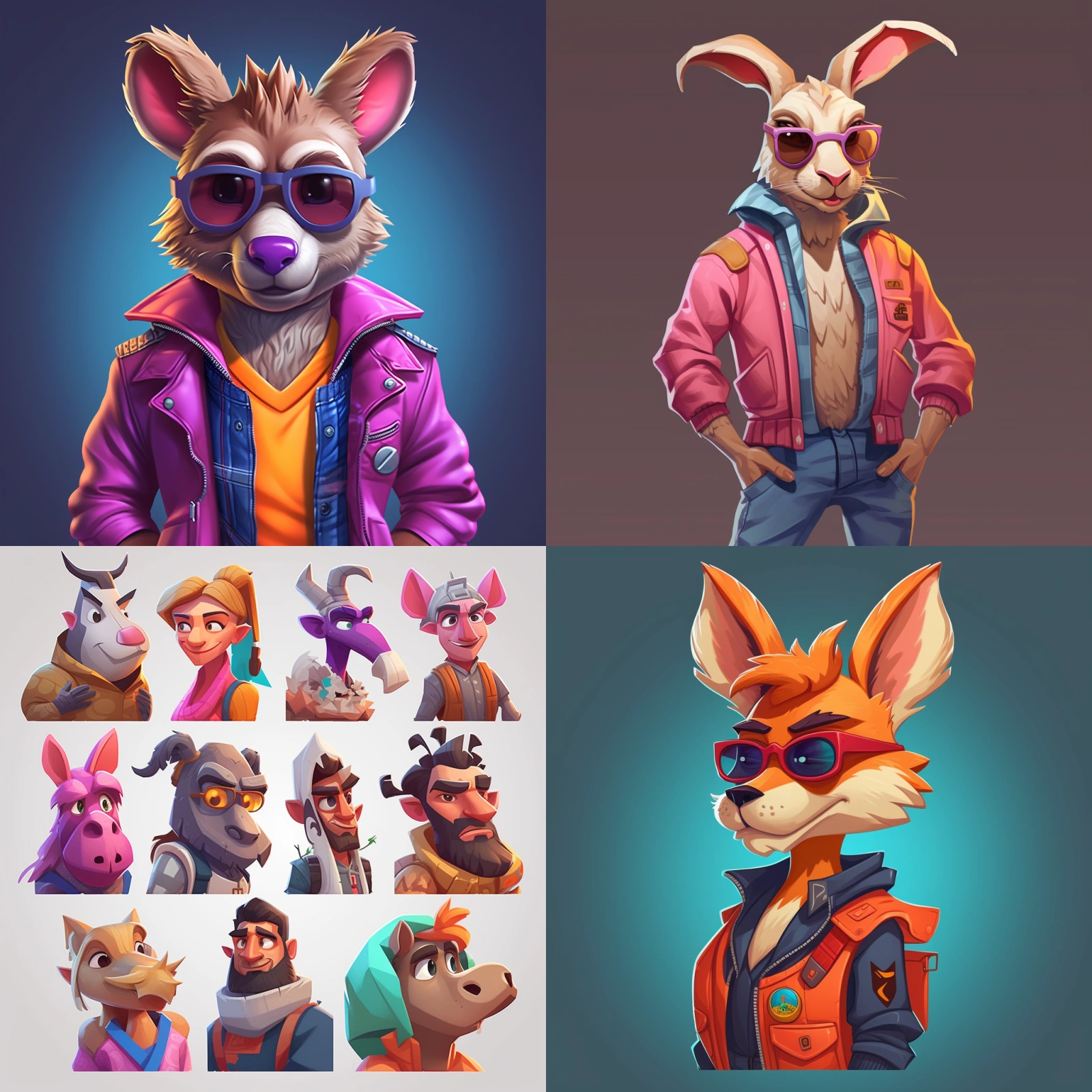
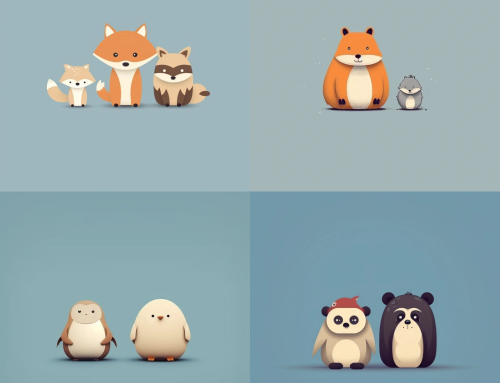
Hyper casual character animals, caricature, stylized, fortnite style, simple details and design
First, Let’s Look at the Keywords
Magic words: Profile (character profile), Game characters
Formula: Style + Profile (character profile) + Game characters
Auxiliary words: Comics, cartoons, realism, fantasy, science fiction, ancient, pixels
Game Character Style Classifications
Realistic Style:
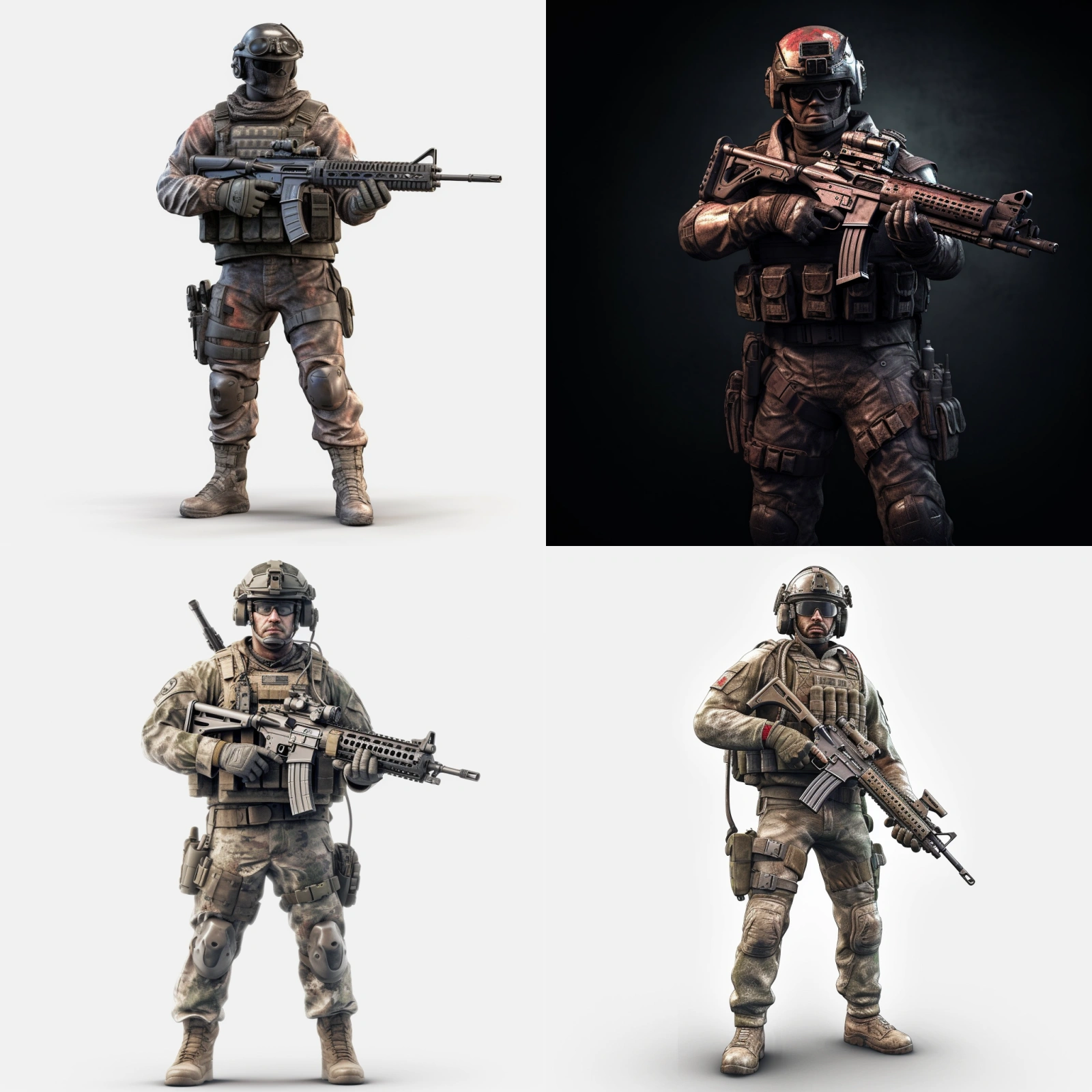
Full body soldier holding a assault gun 4k realistic
This style pursues realism and detail, with character appearances and actions striving to match the real world. It’s common in realistic-themed games, such as military shooters or sports games.
Cartoon Style:
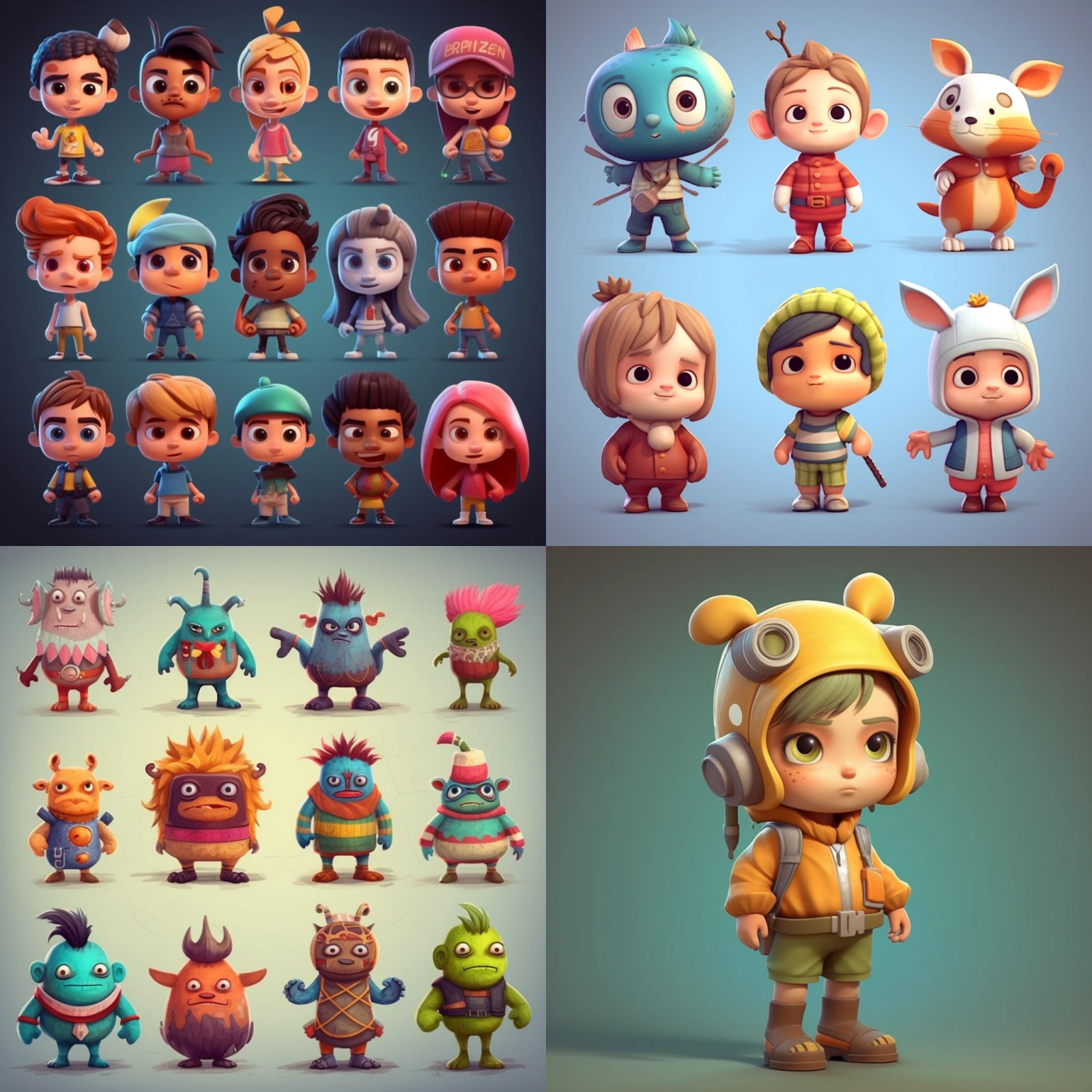
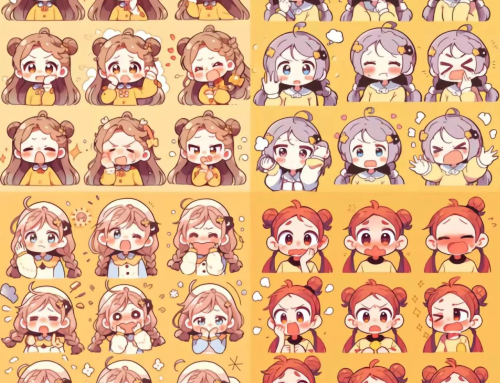
Character. Create cute and charming game characters, perfect for adding some whimsy to your game design.
Cartoon-style characters have exaggerated features and cute appearances. They often have big eyes, large heads, and small bodies, suitable for various types of games, especially family and casual games.
Pixel Style:
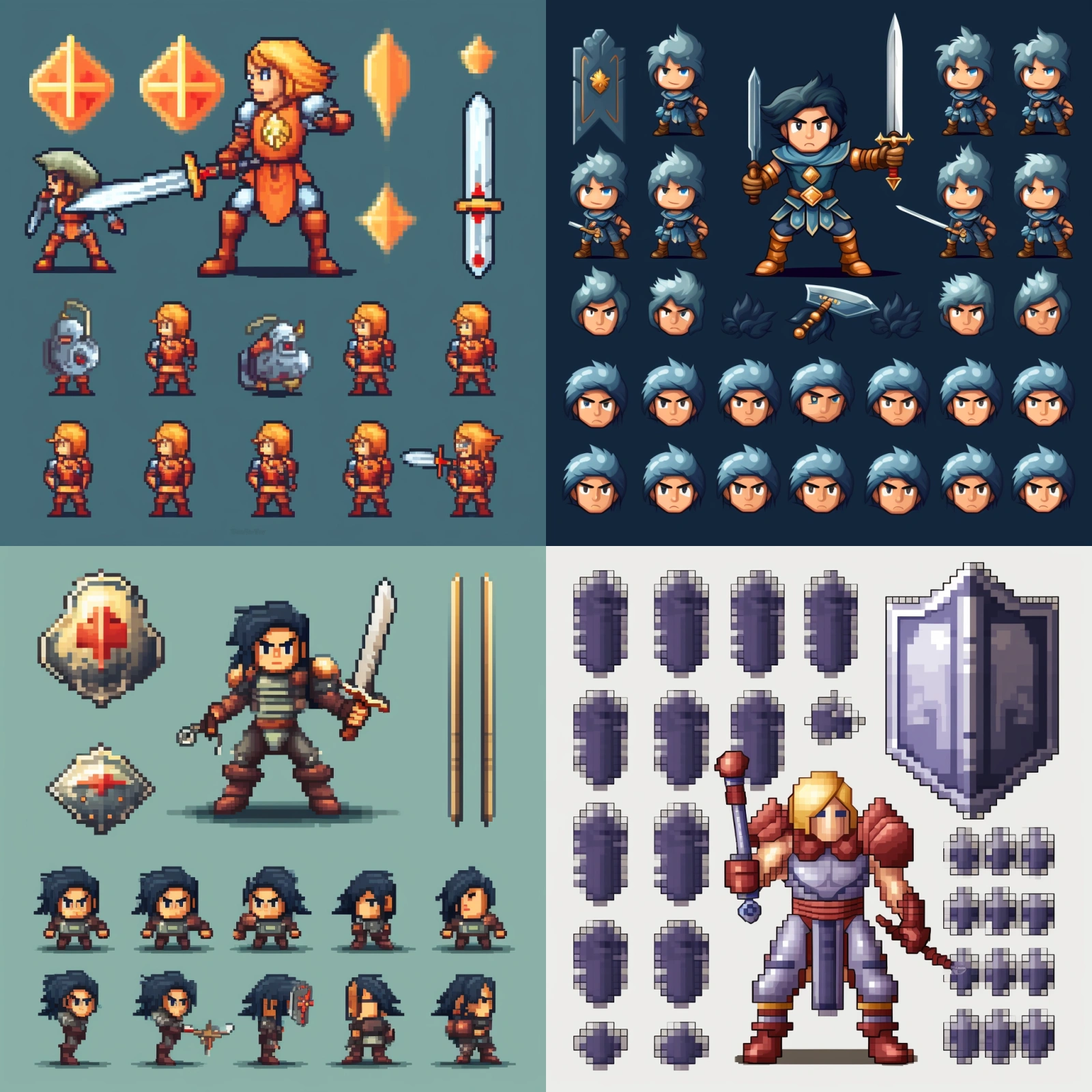
16 bit pixel art of a sprite sheet of a warrior character with sword and shield, walking and attacking animations, RPG Maker MV style
Pixel-style characters use pixelated graphics, presenting a pixel grid style. This style is common in retro games or pixel art style games, giving a nostalgic and unique feeling.
Comic Style:
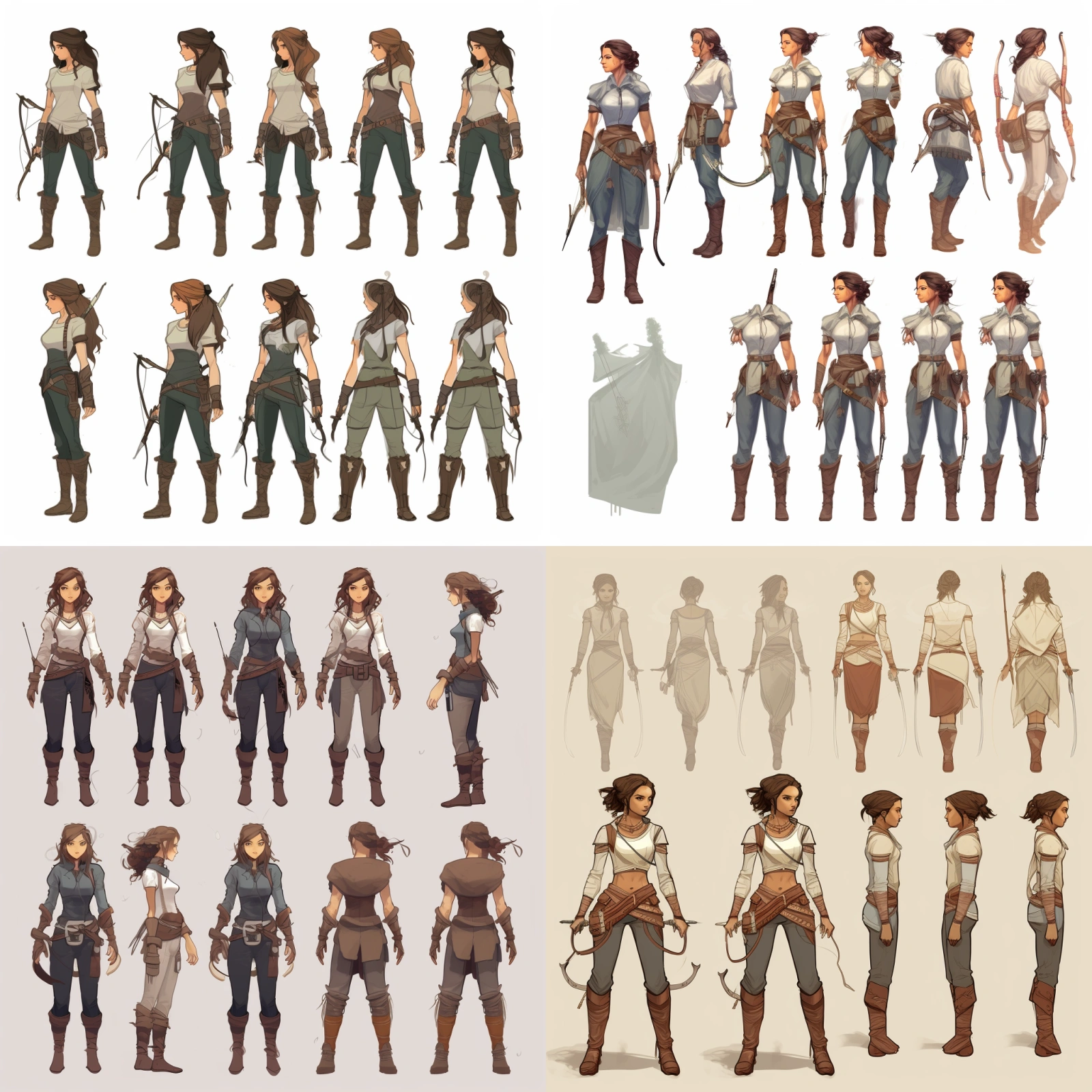
Character design sheet, main character of a fantasy roleplaying game, tomboy female archer, turnaround sheet, concept models, modern clothes
Comic-style characters are influenced by Japanese manga or American comics, featuring thick lines and bright colors. This style is common in role-playing games (RPGs) and action-adventure games.
Fantasy Style:
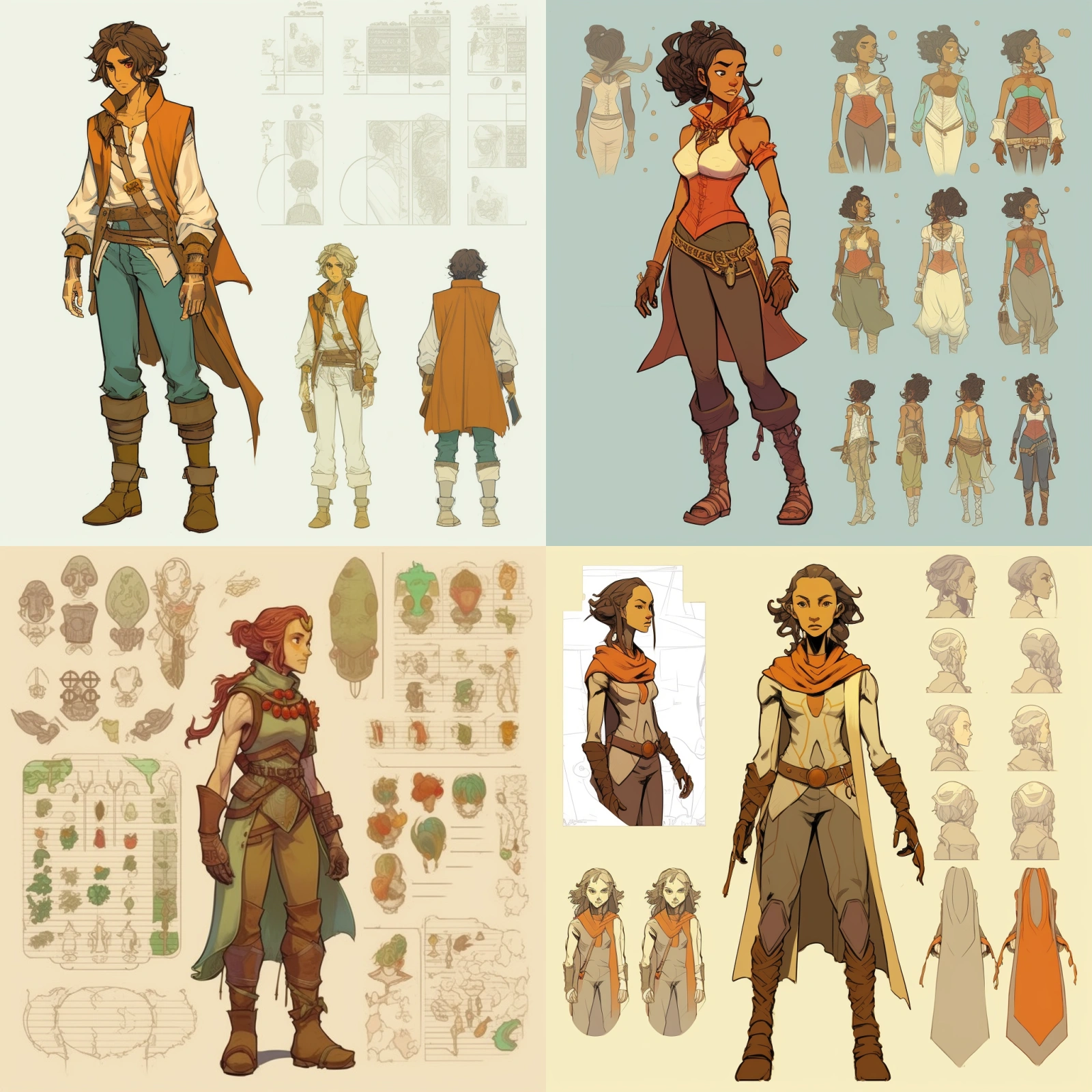
Character reference sheet for an original mythical rpg character, illustrated by Tomer Hanuka, character turnaround, colorized
Fantasy-style characters are usually associated with magic, mythology, and fantasy worlds. They may have exotic costumes, unique racial features, and supernatural abilities, suitable for fantasy-themed games.
Sci-Fi Style:
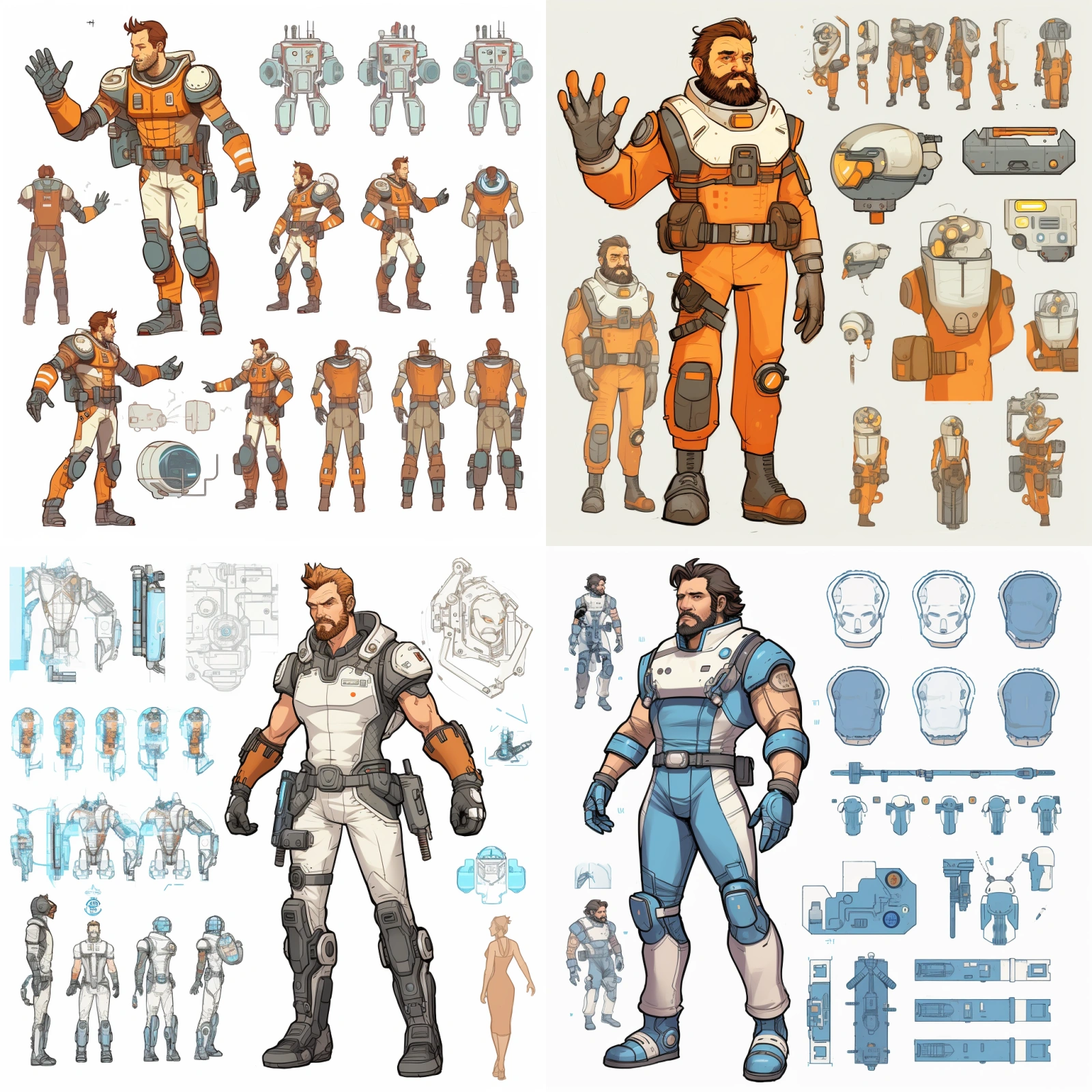
Character sheet, multiple poses, old space redneck pilot with a futuristic prosthetic arm, detailed scifi cartoon style, no background
Sci-fi style characters are often related to future technology, aliens, or machinery. They may wear high-tech equipment, possess advanced weapons and special abilities, suitable for sci-fi shooters or open-world games.
Ancient Style:
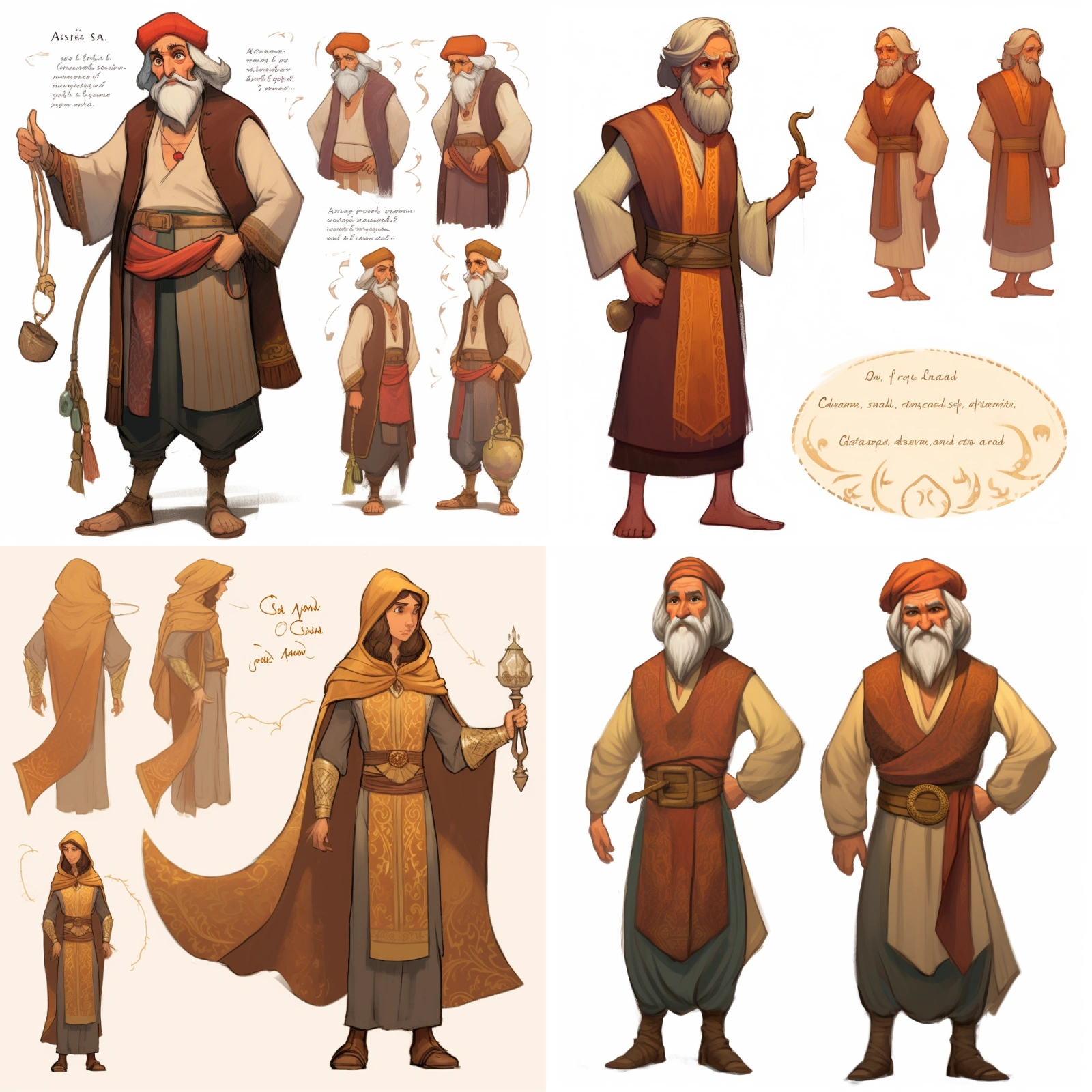
Caspar, the wise man, character sheet, persian disney style ::1 Words, magazine cover, ugly, boring, grey, titles, fonts, frame, surround, ads, filler, dull, uninspired ::-0.5
Ancient-style characters are usually associated with history, traditional culture, or ancient warfare. They may wear traditional costumes, use ancient weapons, and have unique cultural backgrounds, suitable for historically themed games.
These are just some common game character style classifications. In reality, there are many other styles and mixed-style character designs. Designers can choose suitable styles to create unique game character images based on different game types and creative needs.
Summery
Using AI to create game characters has some obvious advantages and disadvantages. The advantages include rapid generation, diversity and innovation, automation and customization, and realistic actions and expressions. AI can quickly generate game characters through algorithms and training data, saving time and workload for designers. It can produce various types and styles of characters, providing more innovative and diverse options. AI can also generate customized characters based on specific needs and parameters, meeting the requirements of different game types and player preferences. Moreover, AI can generate realistic character actions and expressions through deep learning and simulation technology, increasing the sense of realism and immersion in the game. However, there are also some disadvantages to using AI to create game characters. It may lack the unique creativity and aesthetic sense of human designers and cannot completely replace human characters. The results generated by AI are limited by the quality of data and algorithms, and may have limitations and deficiencies. Current AI technology still has limitations in understanding and expressing complex character traits and personalities. Therefore, AI can be used as an auxiliary tool and creative inspiration, but still requires the involvement and review of human designers to ensure the final quality of game character design and player experience.